Article number T626
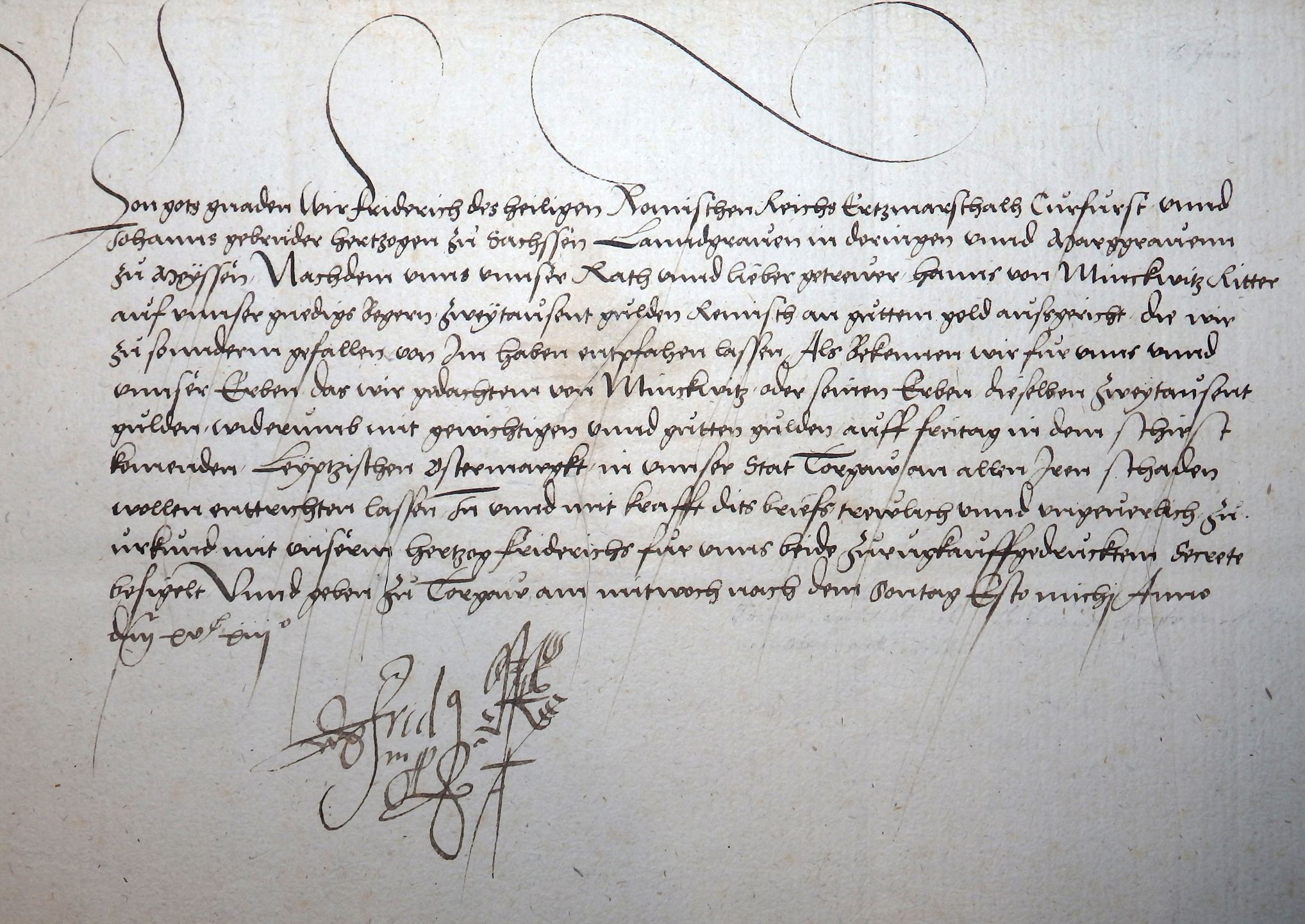
Frederick the Wise, Loan, Torgau, AD 1513
From the Werner Deichmann collection, Solingen

Catalogue
Besides the historical, aesthetic and artisanal aspects, what fascinates about early works from the Gothic and Renaissance periods is the written word as the basis and conveyor of human knowledge and as the foundation of our present-day society. With the invention of printing around the middle of the 15th century, all knowledge could henceforth be “stored” in books and spread across the entire globe.
This first media revolution changed the world as profoundly as the invention of the computer 500 years later, the emergence of the internet and the development of artificial intelligence today. But illustration, as knowledge put into pictures, also played an important role during this first media revolution. Increasingly usable sea charts and maps were produced, and in the chronicles and specialist books of this time readers found, among other things, the first images of distant cities, of plants and animals unknown to them, and reproductions of classical art. Printing also had an enormous influence on the development of art and craftsmanship and ushered in their subsequent stylistic periods.
Treasures of paper and parchment have become rare! The print runs of the first printed books amounted to a few hundred copies. Over the centuries, the effects of wars, censors and climatic conditions decimated the stocks. Most of the copies of early prints and manuscripts still preserved today are in museums and in state and regional libraries – very few are in private hands.
Unlike almost all other high-value art and collector’s items, manuscripts and early prints were and remain forgery-proof! You can be absolutely certain that you own an original. The old, original laid paper was and is too precious. The natural ageing of animal skin is too complicated, a watermark too difficult to reproduce technically. The Gothic printing and writing processes are too elaborate.